

 530+ Google Reviews



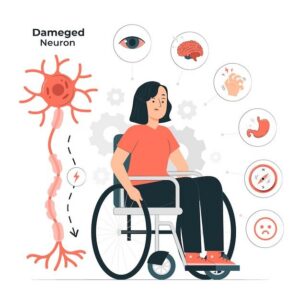
Yes, multiple sclerosis (MS) can qualify for disability benefits when your symptoms keep you from working or meeting daily job demands on a sustained basis. MS affects people in different ways, so disability claims often depend on how the condition limits movement, balance, vision, coordination, strength, memory, or fatigue.
Medical records play a large role in these cases. The Social Security Administration (SSA) will look at your diagnosis, test results, treatment history, reported symptoms, and how those symptoms affect your ability to function at work. Our Rutherfordton Social Security Disability lawyer at Farmer & Morris Law, PLLC can help you through the process.
What Does the SSA Look for in an MS Disability Claim?
The SSA looks for proof that MS causes serious functional limits that keep you from performing substantial work activity. A diagnosis alone is usually not enough. You must also show how your condition affects your ability to stand, walk, use your hands, concentrate, see clearly, or complete a full work schedule.
Medical evidence often includes neurology records, MRI findings, physical exam notes, vision testing, and treatment history. Records describing fatigue, weakness, numbness, tremors, balance issues, and cognitive changes can also matter.
Your application may be stronger when your records consistently describe symptoms over time. Gaps in treatment or limited documentation can make the review harder. That is one reason many people seek legal help before filing or while appealing a denial.
Can You Get Disability for MS if Symptoms Come and Go?
Yes, you may still qualify for disability with MS even if your symptoms flare up and then improve for periods of time. MS often follows an uneven pattern, and disability reviewers are supposed to consider how recurring episodes affect your ability to work on a regular basis.
A record of relapses, emergency visits, medication changes, and ongoing complaints can help show the pattern of your condition. Notes from your doctors about fatigue after activity, poor balance, or trouble using your hands may also show why full-time work is not realistic.
You should also be ready to explain how often symptoms return and how long they last. Work ability is not measured by your best day. It is usually judged by whether you can keep working week after week despite your condition.
Personal Injury Lawyer Near Me (828) 286-3866
What Symptoms of MS May Support a Disability Claim?
Many symptoms of MS may support a disability claim if they interfere with work tasks in a lasting way. The strongest claims usually connect symptoms to real work limits, such as difficulty standing for long periods, typing, following instructions, or staying focused through the day.
Physical and cognitive symptoms can both matter. Your records may describe several kinds of limitations. Common examples include the following:
- Severe fatigue may make it hard to complete a normal workday or workweek.
- Muscle weakness may limit lifting, walking, climbing, or standing.
- Numbness or poor coordination may affect typing, writing, or handling objects.
- Vision problems may interfere with reading, driving, or using screens safely.
- Balance issues may raise the risk of falls in many work settings.
- Memory or concentration problems may reduce your ability to follow directions or stay on task.
Claims are often stronger when your symptoms are documented by treating providers over time. Self-reported symptoms still matter, but supporting medical notes can make the overall picture clearer. Consistent reports from specialists, therapists, and primary care providers can all help.
Does MS Automatically Qualify You for Disability Benefits?
No, MS does not automatically qualify you for disability benefits. Social Security does not approve claims based only on the name of a condition. You still need evidence showing that your symptoms are severe enough to prevent substantial work activity for at least 12 months or to be expected to do so.
Some people qualify because their medical records meet Social Security’s listing for multiple sclerosis. Others may qualify because their functional limits leave them unable to do past work or adjust to other work. That means two people with the same diagnosis may receive different outcomes based on their records, symptoms, age, and work background.
This is one reason the answer to does MS qualify for disability depends on more than a diagnosis. The question is usually whether your documented limits fit Social Security’s rules. A detailed application can help show that connection.
What Evidence Helps Prove That MS is Disabling?
Treatment notes may show worsening fatigue, walking changes, weakness, falls, or cognitive decline over repeated visits. Those details can help connect the diagnosis to job-related limits. Statements from treating providers may also describe how long you can sit, stand, walk, lift, concentrate, or use your hands. Common evidence:
- MRI results may support the diagnosis and track disease activity.
- Neurological examinations may document reflex changes, weakness, tremors, or sensory loss.
- Physical or occupational therapy records may show balance problems and reduced endurance.
- Vision testing may help document optic neuritis or other sight-related limits.
- Medication records may show side effects that affect daily functioning.
- Personal symptom reports may help explain how MS affects your routine from day to day.
Even strong medical evidence should be organized in a way that clearly shows your work-related restrictions. If records are scattered or incomplete, the agency may miss part of the picture. That can affect whether MS disability benefits are approved.
Learn More About Qualifying for Disability With MS
MS can qualify for disability, but the answer often depends on the medical proof, the severity of your symptoms, and whether those symptoms prevent steady work over time.
If you are applying for benefits or appealing a denial, Farmer & Morris Law, PLLC can help you learn more about your options. Contact us for a free consultation.